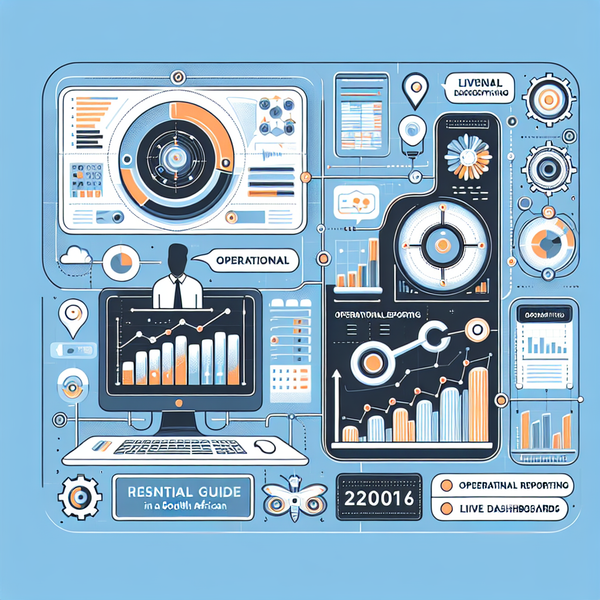
Operational Intelligence Dashboards: Empowering South African Businesses in 2026
In 2026, operational intelligence dashboards are revolutionising how South African enterprises monitor performance, optimise operations, and leverage AI for real-time decision-making. As businesses face rising demands for efficiency amid economic pressures, these dashboards provide a single pane of…

Operational Intelligence Dashboards: Empowering South African Businesses in 2026
Operational Intelligence Dashboards: Empowering South African Businesses in 2026
In 2026, operational intelligence dashboards are revolutionising how South African enterprises monitor performance, optimise operations, and leverage AI for real-time decision-making. As businesses face rising demands for efficiency amid economic pressures, these dashboards provide a single pane of glass for critical KPIs, enabling proactive management in sectors like manufacturing, healthcare, and logistics.[1][2]
What Are Operational Intelligence Dashboards?
Operational intelligence dashboards deliver real-time views of business performance, focusing on day-to-day activities and short-term goals. Unlike static reports, they pull live data from sources like CRM and ERP systems, refreshing automatically via cloud services for up-to-date insights.[1]
Key features include:
- Real-time data integration: Track KPIs instantly, spotting bottlenecks in production lines or sales trends.[1][2]
- AI-powered analytics: Automated monitoring detects anomalies, like Yellowfin's Signals for alerting on data shifts.[1]
- Customisable visuals: Embed reports for drill-down analysis, supporting augmented analytics for non-experts.[1]
For South African firms, tools like Microsoft Power BI dominate, offering robust real-time dashboards South Africa capabilities tailored to local needs.[7]
Why Operational Intelligence Dashboards Are Trending in South Africa in 2026
With AI execution taking centre stage, 2026 marks the shift from experimentation to operational AI in South Africa. Events like the ITWeb Data Insights Summit 2026 in Johannesburg highlight "Insight to Impact," emphasising operational intelligence dashboards for data-driven enterprises.[3]
High-search trends this month include "KPI dashboard" queries, as businesses seek tools for event-driven pipelines and DataOps automation—essential for real-time analytics in AI-ready setups.[2]
Key Benefits for South African Industries
- Real-time Monitoring & Optimisation: In manufacturing, dashboards track production yields and downtime, as seen with DENSO's Yellowfin implementation. South African fleets use them for AI-driven routing and maintenance, widening efficiency gaps.[1][4]
- Proactive Issue Detection: Set alerts for thresholds, preventing outages or fraud—vital for resource-strapped SMEs.[1]
- Data Quality & Governance: Embed governance in pipelines to ensure reliable insights, addressing common integration challenges from siloed CRM data.[1][2]
| Industry | Operational Intelligence Dashboards Use Case | South African Relevance |
|---|---|---|
| Healthcare | Patient wait times, bed utilisation | Optimise NHS-style trusts like North Tees[1] |
| Manufacturing | Inventory, equipment performance | Reduce waste in local factories[1] |
| Fleets/Logistics | Routing, fuel efficiency | Boost lender confidence via data[4] |
Implementing Operational Intelligence Dashboards with Mahala CRM
Integrate operational intelligence dashboards seamlessly with CRM systems. For South African businesses, Mahala CRM's Dashboard Analytics offers custom KPI tracking, while their Integrations page supports real-time data from ERP and sales tools—perfect for building a unified view.
// Example KPI Dashboard Config (Power BI style)
{
  "kpi": "Production Speed",
  "source": "ERP Real-Time Stream",
  "alertThreshold": 80,
  "visual": "Gauge Chart"
}
Start with cloud-native platforms for scalability, adopting DataOps for automated quality checks.[2]
Challenges and Best Practices
Common hurdles include data silos and quality issues. Overcome them by prioritising ETL processes and vendors with strong support.[1] For South Africa, focus on hybrid cloud setups to handle load shedding resilience.
Conclusion
Operational intelligence dashboards are indispensable for South African businesses in 2026, turning data into actionable impact amid AI execution trends. Adopt them now to stay competitive—explore tools like Power BI or integrate with Mahala CRM for immediate gains. For deeper dives, check Yellowfin's guide on BI Dashboards in 2026.